Bharath Chari
Most of my time is spent on a single question: how do you build financial infrastructure that works for people who have been left out of it? Not as a thought experiment, but in practice — with real banks, real regulators, and real communities that depend on getting it right.
I serve on the board of InFTF, the Inclusive Financial Technology Foundation, a non-profit registered in Estonia. The problem we are working on is not obscure. The global remittance market exceeds $800 billion a year. Families sending money home still pay six to eight percent and wait days. That is not a technical limitation — it is a structural one. The infrastructure was built for institutions, not for the people who need it most.
InFTF works on the Xahau network, which was designed with financial-grade requirements from the start. Compliance — KYC, AML, regulatory checks — is enforced at the protocol level. Speed, low cost, and rigour are not in tension with each other. That is the foundation everything else is built on.
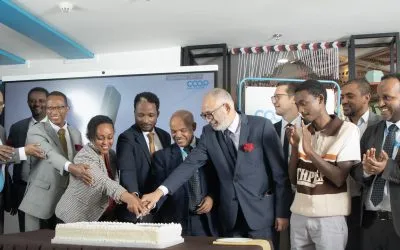
One example of this in practice is our partnership with the Cooperative Bank of Oromia — over 14.5 million accounts, 750 branches across Ethiopia. Together we built a remittance service for the Ethiopian diaspora: instant transfers, fractions of a cent per transaction, directly into bank accounts. Recipients need no knowledge of blockchain. The technology disappears into the background. What remains is money arriving where it is needed.
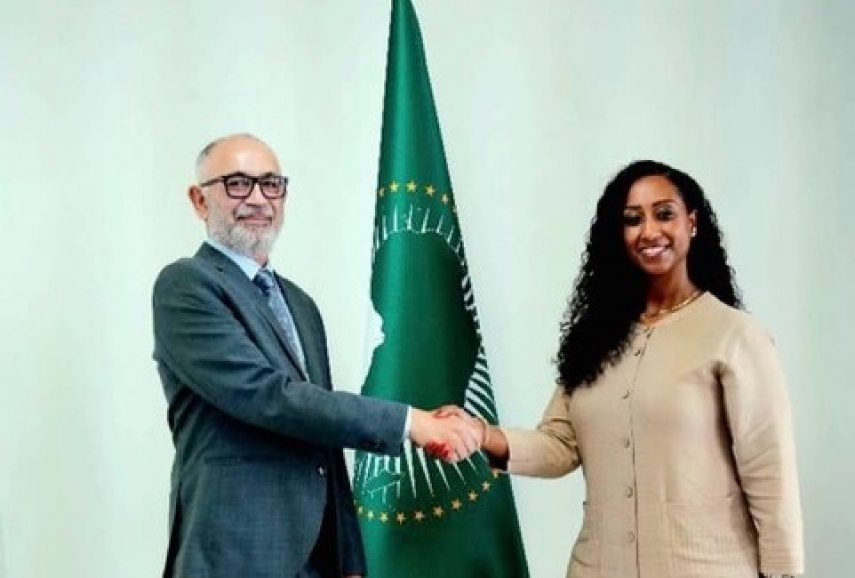
In October 2024, InFTF signed a Memorandum of Understanding with the African Union Peace Fund — the first time a private non-profit from Estonia had entered such a partnership with the AU. We are building a donation platform on Xahau that allows contributions in multiple currencies to peace initiatives across the continent. The intent is to lower the barrier to participation, not raise a flag about having done so.
The policy questions around all of this are not settled. As stablecoins take hold in emerging economies, monetary sovereignty becomes a real concern — not a theoretical one. I wrote about this in an article on preserving monetary sovereignty in the age of stablecoins, drawing on what is happening in Ethiopia, Argentina, Nigeria, the Philippines, and Indonesia. InFTF also collaborated with Quantoz to bring EURQ — a MiCA-compliant euro stablecoin — to the Xahau network, which opens corridors that did not previously exist.
InFTF has a close relationship with TalTech — Tallinn University of Technology. In November 2024, InFTF made the first digital asset donation to a university in Estonia, contributing two million XAH to the TalTech Development Fund. The work matters more when it outlasts any single project.
Before this became the centre of my work, I spent years in marketing, media, and technology — bringing products to markets across India, South-East Asia, the Middle East, Africa, and Europe. Early on at WorldSpace I helped roll out subscription satellite radio across multiple continents, which taught me that the hardest problems in new markets are rarely technical. They are problems of trust, reach, and timing.
Since 2013 I have run Titanium OÜ in Estonia. The technology arm, Alloy Networks, is an enterprise infrastructure provider operating hosting and network stacks for projects that need reliability over novelty. Durable infrastructure has to be shared infrastructure.